The middle is a dangerous place to be

IMG_1642According to a Goldilocks logic, the middle is a good place to be. It’s the Via Media between two extremes.  It’s the place politicians [used to] fashion compromise.  It’s the place most of us look for balance. Typically, the middle is a place of safety.

Or at least it used to be.  My first glimpse of this when someone told me, years ago, about “glocal.”  This is a portmanteau made up of “global” and “local.”  What falls out is the middle, the spaces between the whole of the world and one’s immediate community.  In a strange twist, we became more cosmopolitan and more provincial at the same moment.

The death of the middle is especially evident in the world of movies. We have block busters on high.  They have budgets of one or more hundreds of millions. We have a great tribe of indies below. The budget here is typically tens of thousands, effectively whatever the filmmaker can squeeze out of their own and their parents’ credit cards. In the middle, the pickings are scarce. Judd Apatow mostly. Not, as they say, that there is anything wrong with that.

The death of the middle is also evident in the world of music.  Here is Derek Thompson on where we stand.

The top 1 percent of bands and solo artists now earn 77 percent of all revenue from recorded music, media researchers report. And even though the amount of digital music sold has surged, the 10 best-selling tracks command 82 percent more of the market than they did a decade ago. The advent of do-it-yourself artists in the digital age may have grown music’s long tail, but its fat head keeps getting fatter.

But today while reading an very interesting essay by David Autor, I came across this chilling passage.  There is, it turns out, a hole in the employment market as well.

“the structure of job opportunities in the United States has sharply polarized over the past two decades, with expanding job opportunities in both high-skill, high-wage occupations and low-skill, low- wage occupations, coupled with contracting opportunities in middle-wage, middle-skill white-collar and blue-collar jobs. Concretely, employment and earnings are rising in both high- education professional, technical, and managerial occupations and, since the late 1980s, in low-education food service, personal care, and protective service occupations. Conversely, job opportunities are declining in both middle-skill, white- collar clerical, administrative, and sales occupations and in middle-skill, blue-collar production, craft, and operative occupations.”

Are these missing middles related?  I leave that to readers.

Autor, David. 2010. “The Polarization of Job Opportunities in the U.S. Labor Market Implications for Employment and Earnings.” Center for American Progress: The Hamilton Project. http://economics.mit.edu/files/5554.

image: I took this photo in London this fall.  I like the way the lamp standard divides the Victorian beauty on the right and the modernist beauty on the left.  A razor thin middle.

post script: the paragraph from Derek Thompson was added several hours after the post went up.

Women, power and popular culture

iu-1There’s a business school in the US in which female students routinely use the “interrogative lilt” when speaking in class.

This “lilt” turns assertions into questions. The phrase “this strategy looks promising” is made to rise at the end, becoming “this strategy looks promising?” The speaker is now asking for agreement instead of insisting on it.

In a business school!  If women are not learning to be forthright here, something is entirely wrong with the world.  I mean, really.

Popular culture continues to cultivate images that make woman look little, unassuming, unthreatening, unintelligent, and incapable.

Happily, some women are fighting back and using popular culture to redefine themselves. Videos from Ingrid Michaelson (Girls Chase Boys) and Meghan Trainor (All About That Base) give us two great cases in point.  But neither of these go after the “lilting” problem.

I am persuaded that this work will be done by actresses in the world of film and TV. They will portray women wielding power. They will show us how to transcend acts of deference.

The early days were frustrating.  Some actors would overcorrect. They “butch up” their performances but this had the unhappy effect of costing them nuance, as actors and as characters. There was a lot of growling and shouting.  But of course real power usually comes in a more subtle form (and is more effective for its subtlety).

But we are getting signs of a new approach.

In Murder in the First (TNT), Bess Rous as Ivana West and the acting CEO of Applsn confronts her boss.  She is leaving the company and wants to let him know.  He’s a world class bully and tries to intimidate her.  She doesn’t blink.  She doesn’t back down.  In a great performance of self possession,  Rous/West just doesn’t care. She meets his hostility with an attitude that sits somewhere between pity and contempt. No bluff, no rattling of arms. Just an implacable presumption that he doesn’t matter and that she does.  No lilting here. (Please could someone get this scene on YouTube.)

In episode 3 of The Killing (Netflix) we get Joan Allen (pictured) as the head of a military academy. And the pity of this performance is that it is designed to make her look a bit of a monster. But even as Allen satisfies this requirement of the role, she works in little grace notes everywhere. Which is to say this actress can deliver an overbearing authority and not lose control of subtle messages. This aspect of Allen’s art, the ability to assume authority without diminishes it or herself, was also on display in the Bourne Conspiracy.

Tea Leoni as Madam Secretary (in Madam Secretary, CBS) is giving us a variation on the theme. Her approach to power exhibits a light hand. Madam Secretary leaves no doubt that she has power and what she will do with it when dealing with people who disappoint her, but mostly she is alive to the humor and the ironies of the moment.  Call this a sprezzatura performance of power.It’s a welcome addition to our power vocabulary.  (Men have something to learn here.)

Compare this performance to the one being given in Homeland by Clare Danes as Carrie Mattheson.  This is a wonderfully ferocious “let it rip” approach to power. Clare/Carrie goes at it. (She succeeds in making the men around her look like time-serving careerists.)  This is sheer intensity, with no trace of ego or self aggrandizement.  (Men could learn something here too.)

Our culture is under reconstruction.  Gender, especially, is changing. And I think of all the ways the US qualifies as a “city on a hill,” as a prime mover in social progress, it’s surely here on the question of gender that we are most watched and most admired.

Elizabeth I, long may she rule over us

iu-3Today is the anniversary of the accession of Elizabeth I to the throne of England in 1558. For Elizabethans, November 17th became a great celebration, an opportunity for bonfires and fireworks. Towards the end of her reign, they thanked God for their monarch. Things were not so promising in 1558.

Elizabeth I was confronted by male aristocrats happy to relieve a woman of her power. She was confronted by commoners deeply skeptical of a woman’s ability to rule. She did not have a standing army, and she was plagued by both the “over mighty subject” and the “masterless man.” That English taste for disobedience flourished especially in the 16th century.  Sir Thomas Elyot warned, “men’s [hearts] be free and they will love whom they [like].”

Elizabeth was the beneficiary of her grandfather (Henry VII) and his brutal strategies for clearing the kingdom of people with a competitive claim to the throne. But she was also heir to the religious complications created by her father (Henry VIII). England was now the Protestant upstart, and a beacon for those people in every continental country who wished to break with Rome. The Pope declared that the man who killed Elizabeth would commit no sin. Spain believed that a destruction of the English court would be God’s work. Thanks, Dad!

There a lots of historical reasons to revive the celebration. Elizabeth represents the triumph of cunning over stupidity, intelligence over mere cunning, genius over mere intelligence. She was the triumph of will over skepticism, a Renaissance education over the domestic arts, and theatre of power over realpolitik.

But there are also lots of contemporary reasons to celebrate Elizabeth and to remember her.

Kindle Unlimited not quite unlimited (or how Amazon plans to kidnap your data)

Kindle Unlimited is a new service from Amazon which gives the customer free access to thousands of books for a fee of $9.99 a month.

But what happens to our notes, highlights and bookmarks?  Do we get to keep those if we leave Kindle Unlimited?

I just asked Amazon customer service and the answer turns out to be “no.”

When you cancel your Kindle Unlimited subscription, you will be able to access your Kindle Unlimited books until the next billing date listed on your Kindle Unlimited subscription. At the end of your subscription, you will lose access to all your Kindle Unlimited books. Your bookmarks, notes, and highlights will be saved to your Amazon account, but won’t be available until you purchase the book later or renew your Kindle Unlimited subscription. (emphasis added)

This means that if you want to keep your research materials (your research materials, mind you) you will have to pay Amazon a ransom every month for the rest of your life.  Right now it’s around $120 a year.  Clearly, Amazon can set this ransom at any amount it wants.

This must be one of those new fangled business strategies they call making a service “sticky.”   Sticky, yes, and golly if it doesn’t smell too.

A rule of thumb: Content created by the customer belongs to the customer.

We could split the difference here, if need be.  Amazon may have a legitimate claim to withholding our bookmarks and highlights.  But notes?  Notes belong to us.

We are not a family!

426456_10152525527610650_111533975_n

When asked to describe a company, the CEO will almost invariably give us an ingratiating smile and say, “We’re a family.”

Employees are also tempted by the metaphor, and in happier moments, they will enthuse, “this really is my family.”

The truth is painfully otherwise.  The organization will use the employee as long as it suits and then jettison this employee without a flicker of remorse.   And often not even so much as an explanation.  One day you’re there.  The next day you’re gone.

Try that with your family.   “Dad, I’m sorry but you’re fired.  Mom, you have to go too.  We’re cutting back.  What, no, of course we’re sorry.  You’ve done a great job.  But things change.  We want you out of here by end of day.  And we’re going to need your ID  back.  Hand it over.”

“Firing” and “family” never intersect in our culture.  Ever.

I’m not complaining about the fact that people get fired.  Organizations are good at getting things done precisely because we try to stock them with all but only the people they need.

I am complaining about this ugly “family” fiction.  And it’s not just a problem of the group-think, conscious-bending, reality-concealing metaphor. (Though this should be objectionable on its own.)

I’m complaining about the use of the family metaphor to extract  value from employees.  Of course, you’ll give up your weekend, your vacation, your evenings and your personal lives.  We’re a family!  This is what families do for one another.  When used for these manipulative, value boosting purposes, the metaphor is no longer merely malicious, it’s now a deliberate, exploitative, lie.

So Mr. Smarty Pants Anthropologist, what’s the alternative?    I think it’s to define the corporation the way we do a graduate or professional school.

The first assumption  is that you the employee are passing through.  You will learn from what you do here, and move on.  You will work heroically hard but that’s because you are working to improve and get better.  As you do at a graduate or professional school.

We will treat you decently because, well, you are passing through.  And you will go out into the world, and speak ill or well of us.  You will help recruit the next class.  Or you won’t.  In fact, in a perfect world, you will pass through several jobs and return us.

The important thing is that superordinates are encouraged to understand the real relationship they have with a subordinate.  This person is not a member of a family.  This is not an enduring relationship.  We’re not “all in this together.”  Someday this relationship will end.   And we hope you will be better for it, not used up by it.  That’s in a sense is what we are here for.

This doesn’t create a symmetrical relationship, nor should it, but it could help discourage the practice of giving employees big, friendly hugs…while rummaging through their personal effects.

photo:

This is a library at the University of Chicago, blanket like, but covered in snow.  Now that’s a metaphor.

post script

Thomas Stewart has a wonderful essay on the “team” metaphor in Fortune here.

Who did this guy think he was?

MillsI was reading C. Wright Mills’ White Collar this morning.  It’s a searching look at American society after World War II.

I was struck by the tone.

[“White-collar man”] is pushed by forces beyond his control, pulled into movements he does not understand; he gets into situations in which his is the most helpless position. The white-collar man is the hero as victim, the small creature who is acted upon but who does not act, who works along unnoticed in somebody’s office or store, never talking loud, never talking back, never taking a stand.

Surely, I thought to myself, you could render an account that describes the relative power, standing and autonomy of this social group in a way that’s not quite so patronizing.  I mean, isn’t there?  Couldn’t Wright have got most of the descriptive work done here without being so diminishing.  But, no.  It looks as if he has gone out of his way to take the imperial point of view.  Haughty, even.

[“white-collar man”] is more often pitiful than tragic, as he is seen collectively, fighting impersonal inflation, living out in slow misery his yearning for the quick American climb.

Naturally I took particular  umbrage at this passage.

…white-collar man has no culture to lean upon except the contents of a mass society that has shaped him and seeks to manipulate him to its alien ends. For security’s sake, he must strain to attach himself somewhere, but no communities or organizations seem to be thoroughly his. This isolated position makes him excellent material for synthetic molding at the hands of popular culture—print, film, radio, and television. As a metropolitan dweller, he is especially open to the focused onslaught of all the manufactured loyalties and distractions that are contrived and urgently pressed upon those who live in worlds they never made.

This argument is what it is.  You buy it or you don’t.  Personally, I think it’s a bit of myth making that bears an uneven connection to the realities of American life, and almost no connection to the lived experience of middle class life after World War II.  This world was fun,  terrifying, experimental, and reckless.  A large group of people were undertaking individual and collective acts of social and cultural mobility.   White collar?  Try cervical collar.  This was a whip lash world.     (See my chapter “When Cars Could Fly: Raymond Loewy, John Kenneth Galbraith and the 1954 Buick” in Culture and Consumption II for an elaboration of this argument.  See  Home Fires for something more ethnographic.)

C. Wright Mills missed all of this.  What you get is the odor of disappointment, that the middle class was refusing narratives preferred by the radical sociologist.   His topic is the little people, and naturally any reference to autonomy, agency, experiment, self definition or, gasp, individualism is not only not welcome but an impediment to the larger argument.

Wright was a school master, reproving students  for not rising to the intellectual challenge.   How else to explain the tone.  It’s so very confident of the speaker’s authority.  So unafraid of openly scorning the subject.  So certain that the speaker knew better and could claim a higher standing.   Edward Said helped us understand those moments when Western critics presume to generalize and diminish other cultures.  He called it Orientalism.  But what term do we use when  intellectuals diminish not other cultures but their own? Occidentalism?

But the real question is whether anything like this is now possible.  Would anyone talk this way in the present day?   Would anyone dare?  Yes, the white-collar man has been transformed inside and out.  That much is clear.  What about the intellectual?  Any movement there?

Steampunk Cometh?

EmberWhile in London, I had a chance to catch up with Trevor Davis.  Davis is one of the people responsible for the IBM Social Sentiment Index and the prediction in January of 2013 that we should expect Steampunk to move from its status as a niche enthusiasm to something more mainstream.

IBM offered its prediction in a wonderful graphic.  (Click on the image to get a larger view.)

IBM-STEAMPUNK_FINAL_01.08.201_v2

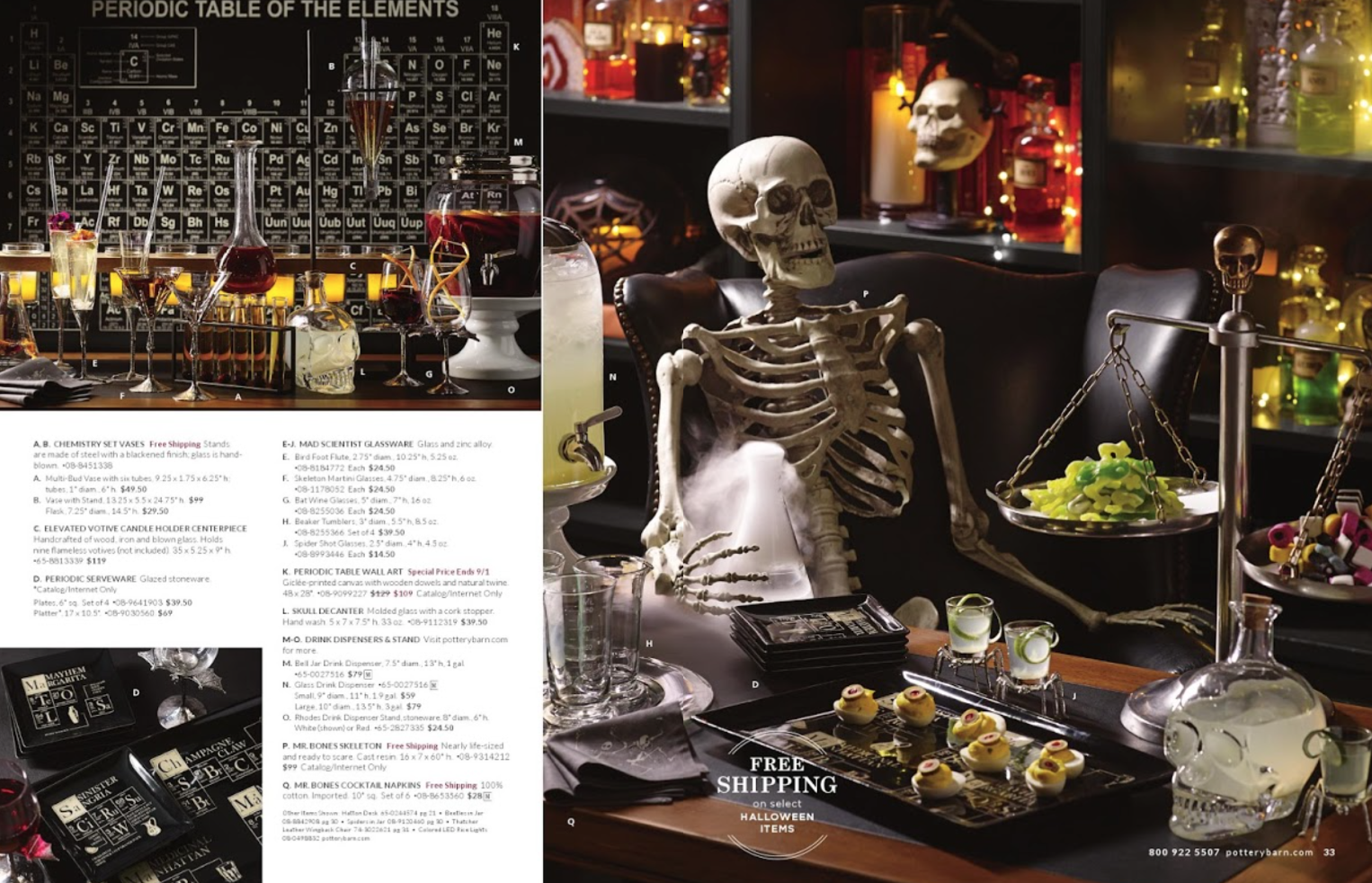
I came home from 3 weeks in London to find a Pottery Barn catalogue waiting for me.

Here, I thought, was just the place you might expect to find a steam punk reference…whatever other cultural trends might come swimming into view.  I began to read.

The results were vexing in the way this kind of work is so often vexing.  There was both no evidence and some evidence of steampunk  in the Pottery Barn catalog.

No, there is no explict reference verbal or visual.  No helmet made of  leather, studs, and brass fittings.  No science fiction weaponry as if designed by a Victorian.  No elaborate time pieces that somehow look to be, mysteriously, steam operated.   No glasses that look like something lifted from a 19th century optometrist.  There was nothing obviously, unmistakably out of the Steampunk design handbook.

And that’s a pity.  These catalogs, stemming perhaps from the brilliant early work by Stephen Gordon for his Restoration Hardware catalogs, now have range they didn’t have in the Sears Roebuck days.  The contemporary catalog lets in lots of things in addition to the product.  Things are staged beautifully and with great care.  So it’s not inconceivable for a Pottery Barn to include a Steampunk helmet or watch for illustrative, evocative, purposes.

Still the fact that there is no explicit reference to Steampunk is NOT evidence that there is no Steampunk influence.  I think you can see it in the color pallet, in the mad scientist theme, in the laboratory.  As follows:

Ember Ember Ember Ember

Ember

In point of fact, something happens to trends as they move from the margin to the mainstream.  They are obliged to give up some of their defining features.   This is a little like the social climber who is obliged to give up some of her friends if she wants to rise.  To include a Steampunk helmet would mean quoting an aspect of the  trend that is too strange and wonderful for the average American household (at least the kind who shop at Pottery Barn).  (If I may voice a note of skepticism against this argument, there is something pretty strange about the skulls.  The American household is perhaps less timid than we think.)

This necessary “gearing down” of the trend is the reason that early adopters often disdain the trend as it enters the mainstream.  Clearly, it’s been diminished or “dumbed down.”  Or to put this another way, the trend must give up some of its extreme characteristics to find a larger audience.  In a word, it must be dedorkified.  (In effect, this reverses the work of the enthusiastic early adopters / inventors who delight in dorkifying the trend in the first place.  I think we can probably agree that the whole issue of dorkification deserves more careful study.)

Trends are Diderot packs.  They are a bundle of ideas, aesthetics, materials, colors, shapes, motifs.  Not all of these are welcome on the voyage from margin to mainstream.  Some will move on.  Others will fall behind.  And this may help explain why the signature pieces of the Steampunk look are not in evidence by the Pottery Barn catalog. Indeed, the absence of these things are exactly what we would expect of Steampunk in this new context.  In sum, the absence of proof is, in a sense, proof of proof.  As it were.

So now we have a problem.  The most defining design signatures, the ones we can used as proof of a trend’s diffusion, are, in some cases, the very things that will be “edited out” by the diffusion process.   It’s not that the Steampunk influence is not there in the Pottery Barn catalog.  But there can be no influence unless it is in a sense rendered invisible.

All of this suggests we need a more robust methodology for identifying a trend in motion.  Perhaps some combination of colors, shapes, objects, with a statistical feeling for how far from random is the presence of certain elements especially in certain combinations.  This tool might enable us to say that our intuitive feeling that the Pottery Barn catalog is in places “pretty Steampunkish” has foundation…because the copresence of these colors, objects and shapes is precisely x far from random.  Naturally we would to examine all the Pottery Barn catalogs and see if we can show when the trend enters the catalogs and whether this corresponds to what we know about the development of the trend itself.

Trends have internal dynamics.  We also know that whether and how fast they move through the social world depends on a set of diffusion dynamics that we are relatively good at thinking about.  (My own modest contribution can be found here.)

But our work as students of the trend is not complete until we create a model of all the trends, and all the decisive economic, historical, social, demographic, technical, digital, and other factors that make up the context in which the trend flourish (or fail).

So was IBM right?  Is the planet called Steampunk exercising a tidal pull on the oceans of contemporary culture?  Reader, you decide.

Word herds: are they changing and why?

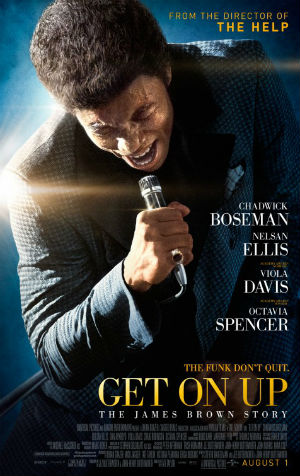
Get_On_Up_posterRichard Corliss describes Chadwick Boseman’s performance as James Brown in Get On Up as something that “radiates sex, drive, menace and spirit.”

Oh, I thought, that’s kinda new.  Normally, a series like this (“sex, drive, menace and spirit”) would have a little more redundancy.  The “word herd” repeated itself to aid comprehension.  In effect, the terms in the word herd meant roughly the same thing.

Words in the herd might even be near or actual synonyms.  Thus the performance might be said to be “deft, subtle, nuanced.”  The first term sets up the meaning, the last one spikes it.  (To use a volleyball metaphor.)

But these days it is much more likely to see word herds that are diverse, with meanings working not together but happily in opposition.  Each word does it’s own work.  These word herds are heterogeneous.  If terms used to be synonyms, now they are a little closer to antonyms.  And the pleasure of reading comes less from going “Oh, that’s what she means.  Got it.” to having to read the whole thing through, admiring the bumper-car effect of unruly language.  Good writers aim for whip lash.

The methodological question: could we examine a large body of texts and see if indeed word herds are changing?  The tricky part, I’m guessing, picking word herds out of millions of words of text.  If this problem can be solved, then the question is whether there is some technique for judging the semantic distance between terms.  What we are looking for, for the sake of this suspicion, is a “before” with relatively little distance and an “after” with lots of it.

Not to rush things, but I think there probably confirmation is waiting to happen.  And not to really rush things, but my guess is that word herds are more heterogeneous for the same reason that so many things in our culture are more heterogeneous.

If once we were monolithic as a social and a cultural order, now we are various.  And we are learning to live with this variousness.  Homogeneous word herd are really training wheels of a kind.  They were designed help us grasp the meaning of a text.  And now they feel like a tedium tax the author is forcing upon us, as an unreasonable condition of entry.

It does feel like everyone is getting smarter.  Certainly, and against the odds, popular culture is getting smarter and this lifts all boats.  But the reason might be there in the everyday act of thinking.  There was a time when we staggered beneath a weight of unanswered questions.  Yes, we could go to the library and find an encyclopedia, but, Dude, really?  All that indeterminacy created, to shift my metaphor, a film, a gauze.  Meaning was hard to see.  Distinctions hard to make.  So it was left to the author to make everything clear, definite and precise.  Got it?

Got it???  How laborious.  Now that we can answer almost any question almost instantaneously, some of that film is gone.  The world is windexed.  The homogeneous word herd just feels like we are being struck about the head and shoulders by a schoolmaster who resents the fact that we are more interested in stray and playful meanings than his lesson plan.  This is language acting like genre, setting up meaning over and over again to remove all doubt…in the process removing all surprise.  We don’t need training wheels.  Not any more.

This is a question for people with methodological skills I do not have.  Maybe Tom Anderson  might care to have a look.  Or perhaps Russ Bernard might have a student who cares to take this on.   Please, if you have a way of solving this problem, sing out!

Will Big Data eclipse Anthropology? You decide.

Ember

This is the Trend visualizer from the New York Times.

Give it a spin here.

“Don’t Peggy Olson me, mother f-ckers”

Peggy_Olson_Wiki

I have been doing ethnographies in London for a couple of weeks.  And the great thing about ethnographies is that things do pour in.

In one interview, the respondent told me about a phrase now poised to serve as a rallying cry in contemporary culture and the corporation.

Here’s the background.

Neko Case, the singer from the Pacific Northwest, was given an award recently.  Playboy congratulated her in a patronizing way and Case let fly.  Someone rebuffed her and Case rebuffed them.

Here it is play by play, tweet by tweet:

Ember

See the fuller context here.

My respondent says she hears the “Don’t Peggy Olson Me” phrase at work more and more.

What a thoroughly contemporary artifact.  A show appears called Mad Men.  It’s an old media contemplation of an age gone by.  It features a character who comes to stand for the status of women in the present day.  An artist used the character’s name as a verb to object to her treatment.  Hey presto, a new media meme is born, and spoken language is a phrase richer.  An issue (feminism) that has lost some of its standing in the public agenda is returned to visibility.  The heat of people’s anger is reregistered, reemphasized.

This is contemporary culture, and its various wheels within wheels spinning as usual ferociously, with meaning skipping from old media to new media and back into the public eye.

One anthropological, the chief culture officer, question is how far will this phrase spread?  At the moment, it is too small to show on Google Trends.  I have asked a couple of people in London to let me know if it reaches them.

But I think we can still use Google Trends as a diffusion monitor.  It is possible when searching a term to subscribe to a weekly report on the term.  In this case, there is no report, but subscribing will, I hope, alert to me if and when the numbers for this phrase get more robust.

Ember

I can’t find a way to draw on an image within WordPress, but see “Subscribe” in bold in the upper-right-hand corner of this clip.

It’s never occurred to me before to treat people as detectors, as trip wires, and ask them to report when they first hear a phrase.  That plus a Google Trend, should help a little to show us how fast this social innovation is traveling.

I would be grateful if readers who’ve heard the phrase would let us know when and where they did.  If you haven’t heard the phrase, it would be great if you could report back when you do.

London

my fox, my Syd

Apologies for having been off air for so long.

I’ve been sprinting to complete research in London.  I am presenting the results today.

The good news: the deck is done.  The bad news: so is the presenter.  So we will see how it goes.

But I did want to share this photo.  It was taken yesterday in the late afternoon.  It shows a Fox, a Red Fox, I think, taking a nap not 60 yards from the place I am staying in Clerkenwell.

Clerkenwell turns out to be an endlessly interesting place to stay.  I recommend it for your next trip to London.  I would give you a quick account here, but I have to get back to buffing and polishing the presentation.  Or at least weeding out the typos.  Oh, for a nap in the afternoon sun!

Trend watch: big weddings in decline?

(Photo by Lyndsey Goddard. See more of her wonderful work here.)

At the VCU Brandcenter last week, Gautam Ramdurai gave a dazzling display of the tools that Google puts at our disposal when it comes to tracking trends.

This weekend I looked at weddings.

By one reckoning, weddings account for $52 billion of expenditure in the US.  And most of it goes to local “mom and pop” operations: florist, caterers, photographers, seamstresses, musicians and planners.  That makes weddings a mighty engine of our local economies.

Here’s what I got from Google Trends:

Ember Ember

Ember


Ember

These data are interesting because almost no one else seems to be talking about a decline in the industry.  In fact, most of the chatter on line describes a wedding industry that scales ever upward.

There is some small journalistic encouragement for the “decline” argument.  Writing for the NYT, Helaine Olen says,

The lower-key wedding, if still a bit unexpected, is having a moment…

Turning to everything from public parks to the living rooms of friends and family, couples are recreating the traditional wedding one ceremony at a time. […]

The Wedding Report, a market research firm, has been tracking the change, noting that in the last year, couples participating in the company’s surveys have increasingly reported a desire for “fun, romantic, simple, casual and unique weddings.”

Vendors concur.

“The backyard is the new ballroom,” said Amy Kaneko, an events planner in San Francisco.

Stacy Scott, a caterer in Marin County, Calif., added, “I think people are waking up to the insanity that is the wedding market.”

Still, it would be wrong to rush to conclusions.  The Google Trend data is merely suggestive.  (Google searches for these topics may be falling because there is now an “oral culture” shared by friends that supplies the knowledge and contacts needed to stage a wedding.  Hence the decline in searches for “wedding planner.”)  And the New York Times story may merely report the exceptions made vivid by the larger trend.

But let’s say there is a trend here.  Let’s say weddings of the “hang the expense, let it rip, more is always better, nothing less than sumptuous will do” kind are in decline.

There is LOTS to think and say about this trend.  “Big weddings in decline” is a trend that must have many causes and many effects.  (I fear especially for those local economies.)

I will leave it to commenters to dig into the cause or effect of their choice. And, yes, if necessary, to insist that I am delusional and that there is no evidence that the big wedding is in any kind of peril.

Robot rescue! Who should we send into the uncanny valley?

Minerva-Terrace-Bicycle-Corps-001Who should we sent into the uncanny valley?  I believe anthropologists might be the right people for the job.

Wait, what’s an uncanny valley again?  As robots become more like humans, the response from humans is positive.  But as robots begin to close the gap, suddenly humans react with revulsion.  There is something chilling about a creature who is near human but not quite human enough.

A vague resemblance is good.  Something like perfect identity is good.  But in between, when the robot is very like a human but still identifiably different, that’s when we put our foot down.  That’s when we get our backs up.  That’s when we find repudiating robots and insisting on their exile in the uncanny valley.

It turns out that anthropologists are good at the uncanny valley.  After all, we spend our time looking at how humans construct and then navigate a world of meaning.  So we are alert to the small signals and involuntary communications with which humans inform other human beings about their intentions and inclinations.    A lot of this is uncanny in another sense.  It’s astounding how good we are at picking up signals that are barely visible. These are the things that robot makers find extremely difficult to program in.

To read subtle signals is the work of anthropology because it’s such a big part of humanhood.  People who can’t send signals or read them are tragic figures.  They are adrift in the very communities that locate and secure the rest of us.  They are lost in social space.  The rest of us are as satellites constantly sending and receiving GPS signals to figure out where we are relative to every thing and one else.

Incidentally, this is why we are so very interested in Autism at the moment.  Some people are bad at signaling but as Aspies  they find themselves in positions of wealth and influence because they possess other,  extraordinary powers of pattern recognition.  And this is a lovely paradox to reckon with and the reason that no fewer than five TV show that feature Aspies (including Bones, The Bridge, and The Big Bang Theory).  Generally, the digital world of innovation and code writing is a world the Aspie finds as transparent as human communities remain opaque.  (Let’s take the character Peter Gregory [as played by the recently departed Christopher Evan Welch] in the HBO show Silicon Valley as a case in point.)

So anthropologist are, I would argue, exactly the people most fit for the uncanny valley.  They are peculiarly well suiting to helping with the programming and design that can help bring robot across the valley and into the human community as fully welcome, integrated parts of it.  (editor!)

Anthropologists are good at phatic communication.  These are the little sounds we give off.  A sigh, a groan, a laugh.  Phatic communication signals our emotional and social condition.  Crucial to human relationships, but tough for programmers because it is in some engineering communities classified as “exhaust data.”  (See my investigation of this problem here.)  Robots are going to have to give off phatic signals.  So we are going to have to consult the anthropologist on this one, not the engineer.

Anthropologists are also masters of sprezzatura.  This is a big piece of human communications.  It consists in the art of learning some social convention and then making it look absolutely natural.  This is a matter of concealing art with art, as Castiglione would say.  (See by treatment of the idea here.)  These social conventions are necessarily hard to see, because the community has deliberately concealed their existence and use.  Again, it makes sense to call in the Anthropologist.

Anthropologist are good at all the signals that have been deliberately removed from view.  One of the reasons that on line meetings (telepresence) has not taken off that many bosses exert their veto power through small signals.  For instance, they may signal their disapproval of an idea by leaning back ever so slightly in their chair.  Subordinates spot this signal…or perhaps it is better to say they sense it…and the idea is nixed.  Again, this sort of thing is generally missing from robot programming.

Finally, anthropologists are good at contradiction, at the ways humans entertain conflicting thoughts and emotions, and give off mixed signals.  And this contradiction is the sort of thing that offends the very soul of a certain kind of engineer.

Of course, you don’t have to be an anthropologist to help out here.   Michael Silverstein at the University of Chicago used to talk about people who were simply supernaturally gifted at social communication.  Not surprisingly they end up in senior management, in sales, in teaching, in marketing, anywhere where their ability serves them to aid in the task of communications.   It’s also probably to that novelists should be particularly useful here.   Show runners like Beau Willimon (House of Cards), and Carlton Cuse and Kerry Ehrin (Bates Motel) would be superb as well.  After all, they use social signals to help us construct interior conditions and social interactions.

So you don’t have to be an anthropologist.  But it helps I think if you are.  You are trained to understand the uncanny valley.   Here’s a very partial list.  Apologies to all I have excluded!  Ken Anderson, Katarina Graffman, Jane Fulton Suri, Mark Dawson, Charles Starrett, Robbie Blinkoff, Rita Denny, Timothy de Waal Malefyt, Emilie Hitch, German Dziebel, Miriam Lueck Avery, Amy Santee, Richard Wise, Patricia Sachs Chess, Phil Surles, Morgan Gerard, Melissa Cefkin, Susan Menke, to name a few.  Ok, a lot.  (People missing from this list are going to be so mad at me.  Apologies all around.)  These people can help us across the uncanny valley.

Image:

“Bicyclists’ group on Minerva Terrace. [Lt. James A. Moss’s company of 25th Infantry, U. S. Army Bicycle Corps, from Fort Missoula, Montana.] YNP.”  October 7, 1896.

Artisanal Trend Timeline

I gave my Culture Camp in London last week.  I feel a little like a peddler producing my new array of household cleaners and brushes.   “Here’s a lovely notion no planner or strategist should be without!”

Here’s one slide that people seemed to find useful.

Artisanal Trend Timeline G. McCracken II

(Apologies if WordPress compresses this slide too much.  Try clicking on it for a larger view.)

The idea was to show trends in motion.  The events picked out in blue represented the pre-artisanal era, the period in which we liked our food fully industrial and the more artificial the better.

(In Camp, we talk about all the machinery perfected for the war effort applied in the late 40s and 50s to food, and the great explosion of prepared food and fast food brands, including of course Tang, that utterly artificial foodstuff endorsed by astronauts!)

Then the reaction, the repudiation, of artisanal food begins with the counter culture and the emergence of the person who was to be the goddess of the new movement, Alice Waters and her restaurant Chez Panisse, the one that was to prove the beachhead of the new movement.  Waters and CP brought a new idea into the world and then sent a diaspora of chefs and enthusiasts who went out into the world to colonize it in the name of the artisanal.

And then comes the reaction to the reaction.  Those events picked out in green are harbingers of the new, as new innovations and inclinations rise up to propose new approaches to food.  This is not to say the artisanal trend will disappear.  Some of its transformative effects have changed us forever.  But a new perspective will emerge, and it will set in train a great revolution in chefs, restaurants, TV shows, cooking magazines, and food culture generally.  And it will change the way we are eating in a decade or so.  At this point, all we have are “faint signals.”

As readers of this blog now, I am looking for more sophisticated ways of looking at culture.  We need these devices if we are to make sense of the great turbulence of our culture.  But I think they also help us clarify culture for clients for whom it is mysterious.  I think this Artisanal Trend Timeline is a good way to say, “Ok, here’s the bigger picture.  This is why we believe you should be primed to launch product X at moment Y.”

If you are interested in attending the Culture Camp, please let me know at grant27ATgmailDOTcom.  The next one will be in New York City possibly in the late summer.

If you want a high rez version of this slide, send me an email at the same address.

Secrets of charisma from Iggy Azalea

I came back from London  yesterday.  As the jet-lag began to lift, I  thought:

“What happened in American culture while I was gone?”

First stop, VH1 where I saw this new video from Ariana Grande.   Grande is so lovely she makes Audrey Hepburn look like an awkward teenager with problem skin and unfortunate hair.

But watch the video and note the performance by Iggy Azalea who comes in at the 1:50 mark.

Doesn’t Iggy, with roughly a third the video, end up owning it?  Somehow, she delivers charisma while Ariana ends up looking quite a lot like Hepburn in some of her lesser roles, lovely but insubstantial.

Ember

The secret is I think clear.  Iggy doesn’t care if we like her.  At 2:22, she does that  “Like, what?” and wrinkles her nose, but that’s the only time she courts our approval.  The rest of the time, the attitude is “aren’t you ever so lucky to be watching this video?”

EmberAriana on the other hand flirts with the camera with a steady flow of entreaties and ingratiations.  Several gestures are meant to emphasize how little and unthreatening she is.  (As if she could be any smaller or less threatening.)

EmberWhile in England, I had a chance to catch up with Peter Collett, a friend from years ago.  (Thank you, John Deighton for putting us back in touch.)  Peter is perhaps the world’s ranking expert in matters of non verbal behavior and I leave it to him to have a look at the video and this blog, and sort things out for us.

Watch this space for Peter’s remarks.

Peter (to whom, devout thanks!) writes:

“Grant, you’re absolutely right about Ariana’s flirtatious signals.   There are far too many to mention, but let’s look at three of them:

  • First there Ariana’s “eye-popping” – when she looks into the camera she frequently widens her eyes.  This makes her look more baby-like, which is why we instinctively feel protective towards her—just as movie audiences did towards Audrey Hepburn, who used the very same eye-popping gesture.

  • Then there’s the “neck-show”, where Ariana tilts her head back or sideways in order to expose her neck.  This is a submissive gesture because it draws attention to a highly vulnerable part of her body and shows that she’s unthreatening.

  • Finally there’s Ariana’s repeated face-touching.  People frequently touch their face when they’re feeling unsure about themselves.  When they do this in our presence it boosts our confidence.  In this context it’s therefore a subtle way of making viewers of the video feel good about themselves.  But let’s not forget that face-touching also acts as a “pointer” – a means of directing viewers’ attention, in this case, to a soft and inviting part of the body.  Did you notice that the male singer also touches his mouth repeatedly during the video? – partly to indicate that he’s not trying to steal the show, but also to mimic Ariana and suggestively advertise what’s on offer.”

Splendid.  Thank you, Peter.

Clearly, it’s more than nonverbal behavior.  Iggy uses a hip hop idiom where Ariana confines herself to a music from which everything vivid or powerful has been deliberately removed.

As a last note, I found this version of the Iggy Azalea Clueless remake (aka Fancy) online and I was stunned to see how much clearer the audio track is.  This is the “explicit” version of the video and I think the means that the “tame” version of the video was created by “graying out” the offensive terms.  This technique, versus removing or replacing, is weird and interesting.  I think.